[email protected] Guangzhou, Guangdong, China
Intertek Onsite Verified EN · USD
0%

The beauty market rewards products that combine a clear purpose with a credible story. McKinsey & Company’s 2023 beauty industry report estimated that global beauty sales could reach about $580 billion by 2027, with roughly 6% annual growth. That broad forecast does not guarantee demand for any single cream. It does, however, show why brands keep exploring focused skincare categories. Collagen Anti Aging Face Cream can offer a recognizable concept, but the formula and evidence behind it matter more than the name alone.

For a brand, the appeal lies in building a practical product around daily use: a smooth texture, easy application, and packaging that protects the formula. Some topical collagen ingredients mainly help condition skin or form a surface film; they should not be presented as rebuilding collagen deep within the skin without suitable evidence. That distinction is easy to miss. It matters. Ingredient choice, stability testing, safety review, and clear claims all shape consumer trust. Brands should also consider skin feel across seasons, fragrance preferences, and whether the cream layers comfortably under sunscreen or makeup. A rich cream may feel reassuring in a dry winter, yet too heavy for some users in humid weather. No formula suits everyone. With careful formulation and honest communication, Collagen Anti Aging Face Cream can become a credible addition to a brand’s portfolio—not a promise of overnight change, but a product designed for consistent, informed use.
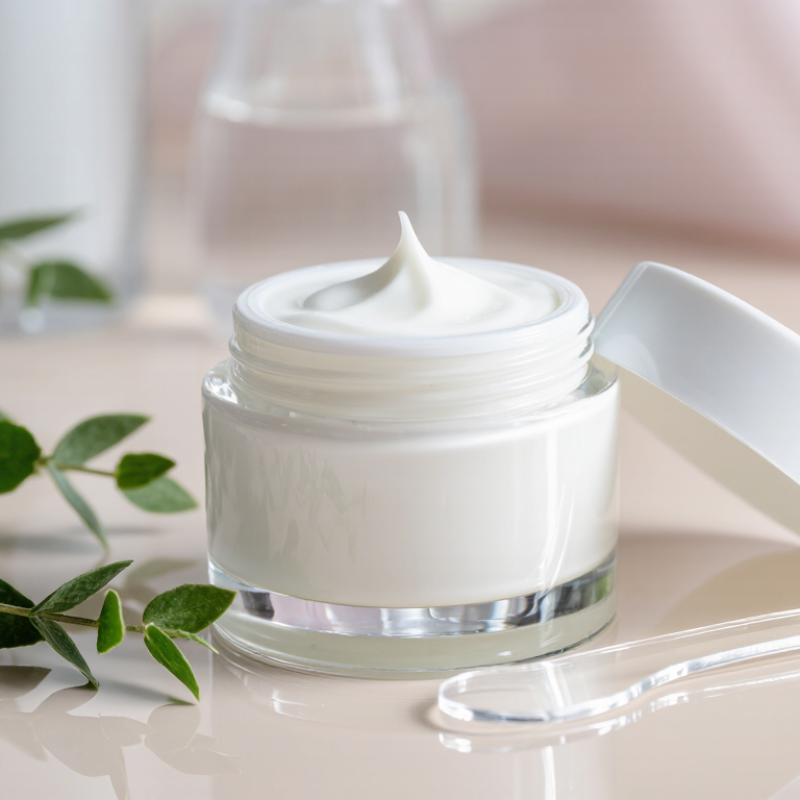
Why Choose Collagen Anti Aging Face Cream for Your Brand?

What Collagen Anti-Aging Face Cream Is

Collagen anti-aging face cream is a moisturizer formulated with collagen, hydrolyzed collagen, or related ingredients. Its immediate role is usually to soften skin and reduce moisture loss, not to replace the collagen naturally found in the dermis. Intact collagen molecules are generally too large to reach that deeper layer through the skin barrier. Hydrolyzed forms may behave differently, but results depend on the ingredient, formula, and testing. The distinction is easy to blur.

A cream can still make skin feel smoother. Humectants draw water into the outer skin, while emollients help leave a softer, less dry feel. Look for clear ingredient names and evidence tied to the finished formula, not just a collagen claim. The evidence has limits. A 2023 systematic review in Nutrients analyzed 26 randomized trials involving 1,721 participants and reported improvements in hydration and elasticity from oral collagen supplements. Those findings do not prove that topical collagen creams produce the same effects. For brand planning, Grand View Research valued the global collagen market at USD 9.1 billion in 2022 and projected growth through 2030; this signals commercial interest, not clinical proof. A useful product description should keep that difference visible. Realistically, a cream may support a comfortable, hydrated appearance without rebuilding deep skin structure.

How Its Ingredients Support Skin Hydration and Appearance

For a collagen anti-aging face cream, the ingredient story should focus on hydration and visible skin feel. Hydrolyzed collagen can form a light film on the skin, helping it feel softer and temporarily reducing moisture loss. It does not replace the collagen naturally found in deeper skin layers. That distinction matters. A cream can improve surface comfort without rebuilding facial structure.

Cosmetics Europe’s 2023 market report recorded €27.8 billion in European skincare retail sales. This signals a large category, not proof that collagen alone drives results. Pairing collagen with established moisturizers, such as glycerin, can support a more complete hydration story. A smooth cream should spread evenly across dry cheek areas and leave no tight, papery feeling. Still, texture and results vary by formula and skin type. The evidence for topical collagen is less settled than many product claims suggest. Brands should describe short-term softness and hydration carefully, and avoid promising dramatic wrinkle reversal. The wording may feel less exciting. It is also more credible.

Why It May Fit Your Brand and Target Market

A collagen anti-aging face cream may suit a brand targeting customers who want a comfortable, easy-to-use step in their daily routine. The right fit depends on more than a trending ingredient. Consider who will use it, when, and how it should feel on skin. A rich cream may appeal to customers with dry skin, while a lighter texture may feel more practical in warm, humid weather. Texture matters.

Product details should match real customer expectations. Topical collagen is commonly used to support skin hydration and softness; a cream should not imply that it rebuilds collagen deep within the skin without suitable evidence. Clear, measured language helps customers understand what the formula can reasonably offer. Ingredient quality, fragrance preferences, packaging, and price also shape whether a product feels relevant to a specific market. A jar may look appealing, but some customers prefer a pump for easier, more controlled use.

Before settling on a concept, review customer feedback and test samples with people from the intended audience. Ask about absorption, residue, scent, and how the cream layers with sunscreen or makeup. One limitation is easy to overlook: a formula that feels luxurious in a cool showroom may feel heavy during a humid afternoon. That distinction matters. Use substantiated product information, and refine the concept when feedback exposes a mismatch.

How to Choose a Formula, Packaging, and Supplier

A collagen anti-aging face cream should begin with a clear, realistic formula brief. In topical products, hydrolyzed collagen is commonly used as a moisturizing or film-forming ingredient; it should not be presented as rebuilding collagen deep in the skin. Ask the formulator for ingredient specifications, recommended use levels, and stability data. Keep claims tied to evidence. Texture matters.

Test samples on clean skin and note how they feel after several hours. A cream that feels elegant in a lab sample may become tacky in warm weather or under sunscreen. Check fragrance, preservatives, and compatibility with the rest of the formula. Request safety and quality documents, and confirm the product is tested for stability and microbial quality. Results can vary by formula, so avoid promising identical performance for every user.

Packaging affects both the user experience and product protection. Compare jars, tubes, and airless pumps for dispensing, sealing, and contact with air or fingers. Airless pumps can reduce repeated exposure, but they may not suit every cream’s thickness. Ask suppliers to test the actual formula in the intended pack, not just a similar sample. Supplier selection needs the same care: review production controls, traceability, lead times, and how defects are handled. Request a pilot batch and inspect the fill, label alignment, and pump action. Small details reveal a lot. A supplier may look capable on paper, yet communication delays during sampling are worth discussing before a larger order.

Why Choose Collagen Anti Aging Face Cream for Your Brand? - How to Choose a Formula, Packaging, and Supplier
Decision Area What to Evaluate Practical Guidance What to Verify
Product Positioning Target user, skin feel, routine, and intended cosmetic benefits Position the cream around moisturization, smoother-feeling skin, or a richer daily-care experience. Avoid implying that a topical cream reverses aging or produces clinical results without appropriate evidence. Review every product name, label statement, and advertisement for consistency with applicable cosmetic regulations and supporting evidence.
Collagen Ingredient Ingredient form, source, solubility, and role in the formula Hydrolyzed collagen consists of smaller protein fragments and may be used as a humectant or film-forming ingredient. Topical collagen should not be presented as proven to rebuild collagen deep within the skin. Request the ingredient specification, INCI name, source documentation, composition, and relevant allergen or animal-origin information.
Moisturizing System Balance of humectants, emollients, and occlusive ingredients Humectants attract and hold water, while emollients help soften the skin. Select the combination and texture to suit the intended user, climate, and day or night use. Assess spreadability, absorption, tackiness, residue, and skin feel in a finished sample—not just from the ingredient list.
Supporting Ingredients Compatibility, concentration, and purpose of additional ingredients Ingredients such as glycerin, emollients, or selected antioxidants may support a moisturizing formula. Add each ingredient for a defined purpose and evaluate the complete formula for compatibility. Request the full ingredient list and confirm that formula claims are supported by suitable product-specific evidence.
Preservation and Safety Microbial protection, product use conditions, and user safety Water-containing creams generally require an appropriate preservation system. Packaging design alone does not replace preservation or microbiological assessment. Request microbiological quality results and an appropriate preservative efficacy assessment for the finished product and its packaging.
Texture and User Experience Viscosity, fragrance, finish, and compatibility with other skincare steps Define whether the product should feel lightweight or rich and whether it will be fragranced. Test samples with representative users and intended routines before finalizing the formula. Document sample feedback and check for separation, pilling, unpleasant odor, or other issues during use testing.
Packaging Format Jar, tube, pump, or airless dispenser; usability and product protection Choose a format that suits the cream's viscosity and intended use. A pump or airless pack can reduce repeated direct contact with the product, but does not by itself guarantee sterility or preservation. Conduct compatibility and dispensing tests with the actual formula, closure, and package materials.
Light and Air Exposure Formula sensitivity and the level of protection provided by the pack Opaque or light-protective packaging may be appropriate when the formula contains light-sensitive ingredients. Packaging should be selected based on formula-specific testing. Check appearance, odor, and performance during stability testing in the proposed final packaging.
Stability and Shelf Life Physical, chemical, and microbiological stability over time Assess the finished formula under suitable storage conditions and in the intended packaging. Do not assign a shelf life based only on the ingredient supplier's information. Request a stability plan, available test results, and a documented basis for the product's shelf life and storage instructions.
Supplier Qualifications Manufacturing controls, technical capability, and quality documentation Evaluate whether the supplier can manufacture the required product type, follow applicable quality practices, and provide clear technical and regulatory support. Review relevant quality certifications or audit information, manufacturing details, change-control procedures, and product documentation.
Commercial Terms Minimum order quantity, development timing, capacity, and supply continuity Compare the total project requirements, including samples, packaging components, production lead time, and expected reorder needs. Obtain written terms for minimum order quantities, lead times, payment, component sourcing, and handling of delays or specification changes.
Final Selection Fit between formula, packaging, evidence, quality, and business needs Shortlist options using a written specification and compare finished samples, test plans, documentation, and commercial terms together. Approve the final formula and pack only after reviewing the relevant safety, stability, compatibility, and claims-support documentation.

How to Assess Product Claims and Quality Standards

Why Choose Collagen Anti Aging Face Cream for Your Brand?

Assess the promise before assessing the packaging. “Anti-aging” can mean softer-feeling skin, improved hydration, or a measured change in fine lines. Ask which result the finished cream is intended to deliver. Topical collagen may help form a moisturizing film, but it should not be presented as rebuilding collagen deep in the skin without strong evidence. Be specific. A glossy texture can feel reassuring, but it proves little.

Request evidence for the exact formula, not just a supplier’s ingredient brochure. Look for a well-described consumer or instrumental study, including its duration, number of participants, and measurement method. Photos taken under different lighting are weak evidence. Check that the tested formula matches the product being offered. Even a sound study has limits; results from a small group may not apply to every skin type.

Quality checks matter just as much as claim support. Review ingredient specifications, stability data, microbiological testing, and batch consistency. Ask how the cream performs after repeated use: does the pump clog, does the scent shift, or does the texture separate? These small details affect real customers. Check packaging compatibility and whether the manufacturer follows documented quality procedures. If a claim sounds certain, ask for the data behind it. A careful answer is more useful than a dramatic promise.

Assessing Collagen Cream Claims: Molecular Size in Context

Compare the approximate molecular mass of intact collagen with the commonly cited 500-Dalton skin-penetration rule of thumb. This size comparison is not evidence of a product’s effectiveness.

Intact collagen is a large molecule, so do not assume a topical collagen claim means collagen penetrates deeply into skin. Formulas may contain hydrolyzed collagen or collagen-derived ingredients with different molecular sizes. Assess the ingredient form, supporting evidence, and substantiation for the specific product claim.

Sources: Prockop & Kivirikko, “Collagens: Molecular Biology, Diseases, and Potentials for Therapy,” Annual Review of Biochemistry (1995), doi:10.1146/annurev.bi.64.070195.003101; Bos & Meinardi, “The 500 Dalton rule for the skin penetration of chemical compounds and drugs,” Experimental Dermatology (2000), doi:10.1034/j.1600-0625.2000.009003165.x. The 500-Dalton rule is a rule of thumb, not a universal cutoff.

FAQS

What does collagen anti-aging face cream do?

It usually moisturizes the outer skin and helps reduce moisture loss. Skin may feel softer. It does not replace deep skin collagen.

Can collagen cream rebuild collagen in the skin?

Intact collagen molecules are generally too large to cross the skin barrier. Hydrolyzed forms may behave differently, but results depend on the formula and testing.

Does research on oral collagen prove topical creams work?

No. A review of 26 trials reported hydration and elasticity improvements from oral supplements. Those findings do not establish the same effects for creams. Not proof.

What ingredients should I check in a formula?

Look for clear ingredient names, such as hydrolyzed collagen, and ask about use levels and stability data. Humectants and emollients can support a softer feel.

How can I tell whether a cream feels suitable?

Try a sample on clean skin and check it several hours later. Notice whether it feels tacky, especially in warm weather or under sunscreen. Texture matters.

What safety and quality information should I request?

Ask for safety documents and testing for stability and microbial quality. Check fragrance and preservatives, too. Results can vary.

Which packaging should I consider?

Compare jars, tubes, and airless pumps for dispensing and protection from repeated air or finger contact. Pumps may not work well with every cream’s thickness.

How should I assess a supplier before a larger order?

Review production controls, traceability, lead times, and defect handling. Request a pilot batch and inspect the fill, label alignment, and pump action. Paperwork is not everything.

Conclusion

Collagen Anti Aging Face Cream is a topical skincare product designed to help moisturize the skin and improve the look of dryness and fine lines. Its ingredients may support hydration by helping the skin feel softer and smoother, while complementary components such as humectants and emollients can contribute to a comfortable, healthy-looking appearance. The product’s suitability depends on its formula, intended audience, and how it fits into a brand’s broader skincare range.

When developing or selecting a cream, consider the texture, ingredient compatibility, packaging that protects the formula, and a supplier’s manufacturing and quality practices. Review product claims carefully and keep them clear, realistic, and supported by appropriate evidence. Assessing ingredient information, stability, safety testing, and quality standards can help guide a responsible product choice and build confidence with customers.

Ethan Carter

Ethan Carter

Ethan Carter is a dedicated marketing professional and a trusted voice behind the company’s expert blog. With a strong understanding of the company’s products, services, and target markets, he transforms complex information into clear, practical, and engaging content for readers across different......