Choosing a Centella Asiatica Cica Cream manufacturer involves more than comparing product photos or factory locations. Buyers need to examine ingredient sourcing, formulation expertise, production consistency, and communication. Centella extracts may differ in composition and handling, so clear specifications matter. Details matter.
This guide introduces ten manufacturers in China and offers a practical starting point for comparison. It considers areas such as product development, available manufacturing services, packaging options, and quality documentation. A smooth cream in a sample jar can feel promising, but one sample cannot show how every batch will perform. Ask about testing methods, batch records, and how the supplier addresses changes in texture, color, or scent.
Treat rankings as a shortlist, not a guarantee. A polished catalog is not proof. Confirm company details and request current supporting documents before making a sourcing decision. Where information is limited, that uncertainty should be stated rather than filled with confident assumptions. Manufacturers may also differ in minimum order quantities, lead times, and customization capabilities, so fit depends on the buyer’s needs. Some comparisons are imperfect; public information rarely reveals every production detail. That is worth remembering. With careful questions and evidence-based checks, readers can better identify partners suited to their product goals and expectations.
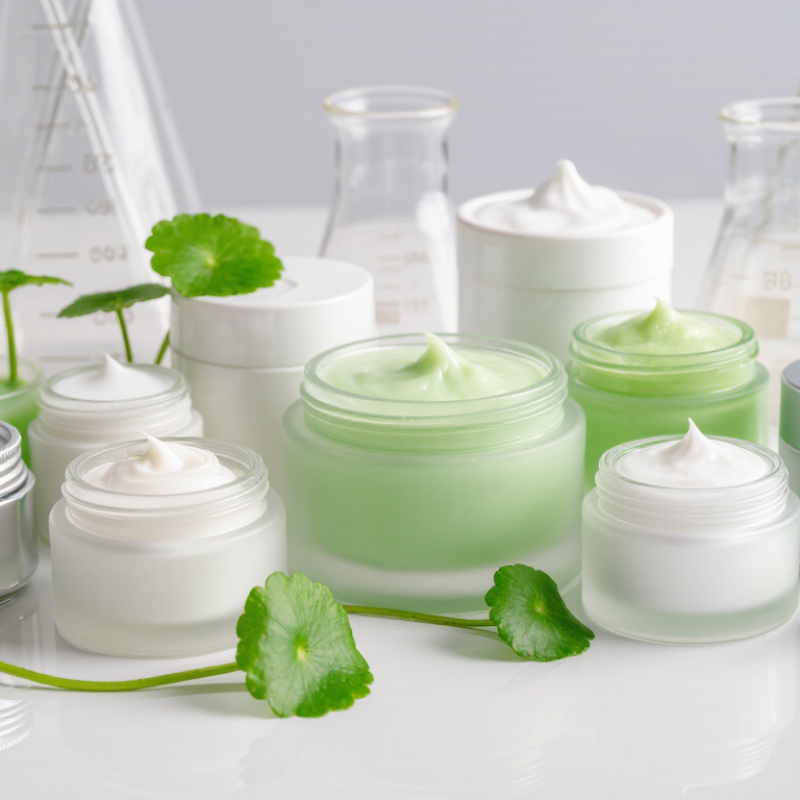
Centella asiatica is the botanical behind many cica creams, but its INCI name tells only part of the story. Ingredient lists may identify it as Centella Asiatica Extract or use a more specific plant-part description. The exact wording depends on the ingredient and labeling system. Look for the full list, not just a prominent “cica” claim. A label alone is not enough.
The plant’s best-known triterpenes include asiaticoside, madecassoside, asiatic acid, and madecassic acid. Some creams use a standardized extract; others may list these compounds separately. Their presence does not reveal the amount in the finished formula. Extraction method, plant material, and storage can all influence an extract’s profile. Check whether the supplier provides identity and composition data, and whether the manufacturer tests incoming materials. Small details matter. Still, ingredient labels can be frustrating: they rarely show the full active-compound picture. For a careful comparison, consider the INCI list alongside available technical documentation and avoid assuming that a longer ingredient list means a stronger cream.
China Top 10 Centella Asiatica Cica Cream Manufacturers
Cica Cream Formulation: Testing Safety, Stability, and Product Claims
A dependable cica cream starts with a controlled formula, not a striking label. Centella asiatica extracts can differ in color, odor, and active-compound levels. Record the extract’s source, specifications, and batch details. Then check how it behaves with the cream’s oils, emulsifiers, and preservatives. A small change can affect texture or separation. It happens.
Safety testing should reflect how people will use the product. Assess microbial quality and preservative performance, and evaluate skin compatibility through suitable testing. Stability checks can include heat, cold, light exposure, and freeze-thaw cycles. Watch for changes in smell, color, pH, and texture. Test the final packaging too; a formula may react differently in a jar than in a tube. Product claims should match the evidence. Comfort or moisturizing claims need support, while claims suggesting treatment require careful review under applicable rules.
Tips: Keep a retained sample from each production batch. Photograph visible changes under consistent lighting, and note test dates and storage conditions. If results are unclear, investigate before making a stronger claim.
This table is a manufacturer-evaluation framework focused on product testing, not a ranked supplier list. Test protocols and acceptance criteria should be set for the specific formula, packaging, intended users, and target market; there is no single universal test plan for every Cica cream.
| Evaluation Area | What to Check | Relevant Method or Reference | Useful Evidence to Request | Interpretation |
|---|---|---|---|---|
| 1. Centella ingredient identity | Confirm the botanical name, plant part, extract type, solvent or carrier, and specification for Centella asiatica ingredients. Where relevant, assess marker compounds such as asiaticoside, madecassoside, asiatic acid, or madecassic acid. | Supplier specification, certificate of analysis, and a validated identity or assay method appropriate to the ingredient. | Ingredient specification, batch certificate, analytical method, and traceability documentation. | Centella extracts can differ in composition. A stated extract percentage alone does not establish the amount of a particular marker compound. |
| 2. Formula and raw-material safety | Review ingredient restrictions, impurity controls, exposure assumptions, and the safety assessment for the finished cosmetic. | Applicable cosmetic laws and ingredient safety requirements in each intended sales market. | Finished-product safety assessment, ingredient list, raw-material specifications, and relevant impurity or contaminant results. | Safety conclusions depend on the complete formula, concentration, use pattern, and target population; ingredient-level information alone is not a finished-product assessment. |
| 3. Microbiological quality | Test the finished product for microbiological quality using a method and limits appropriate to its product category and intended use. | ISO 17516:2014, Cosmetics — Microbiology — Microbiological limits. | Laboratory report identifying the tested batch, sampling details, method, results, and applicable product category. | Applicable limits depend on product classification and use. A single result does not replace manufacturing hygiene controls or ongoing quality monitoring. |
| 4. Preservative effectiveness | Evaluate whether the preservation system controls microbial growth in the finished formula throughout the test. | ISO 11930:2019, Cosmetics — Microbiology — Evaluation of the antimicrobial protection of a cosmetic product. | Challenge-test protocol and report, including the formula, test organisms, time points, results, and interpretation against the selected criteria. | Preservative performance is formula-specific. Packaging, pH, raw materials, and manufacturing conditions can affect the result. |
| 5. Physical and chemical stability | Monitor appearance, odor, color, pH, viscosity, phase separation, and other product-specific attributes during storage. | ISO/TR 18811:2018, Cosmetics — Guidelines on the stability testing of cosmetic products. | Stability protocol showing storage conditions, test intervals, methods, acceptance criteria, and results for representative batches. | Storage conditions and time points should be justified for the product. Accelerated testing can support development but does not automatically establish shelf life. |
| 6. Packaging compatibility | Check for leakage, closure or pump function, changes in product appearance or odor, and possible interaction between the formula and packaging. | Packaging compatibility testing conducted with the intended container, closure, and product-contact materials. | Tested packaging specifications, compatibility observations, dispensing checks, and results from storage in the proposed pack. | Testing in a different container may not represent the commercial pack. Airless, jar, and tube formats can present different use and contamination considerations. |
| 7. Skin compatibility | Assess skin tolerance using an appropriately designed human-use or other scientifically justified safety study, with ethical oversight where required. | Study protocol selected for the product and population; report adverse events and relevant limitations. | Study design, participant criteria, product-use instructions, results, adverse-event record, and independent ethics documentation where applicable. | A tolerance study cannot prove that a product is non-irritating or suitable for every person. Avoid absolute safety claims. |
| 8. Soothing or moisturizing claims | Match each proposed claim to suitable evidence, such as consumer-use data or instrumental measurements relevant to the stated benefit. | Claim-specific study design with defined endpoints, controls where appropriate, and a documented analysis plan. | Complete study report, test-product details, participant and use information, endpoints, results, and the exact wording supported. | Evidence for moisturization does not automatically substantiate redness reduction or other claims. Claims should not exceed what the data demonstrate. |
| 9. Claims and regulatory documentation in China | Check that efficacy claims are supported and that required cosmetic registration, filing, safety, labeling, and claim-related documentation is available for the product category. | China’s Cosmetic Supervision and Administration Regulation and the applicable NMPA rules and technical requirements. | Product registration or filing information as applicable, safety documentation, claim-evaluation materials, and the required efficacy-claim summary. | Requirements depend on product type and claim. Cosmetics should not be presented as treating or preventing disease unless permitted under the relevant regulatory pathway. |
| 10. Manufacturing quality system | Review controls for personnel, premises, production, documentation, quality control, complaints, and traceability. | ISO 22716:2007, Cosmetics — Good Manufacturing Practices (GMP) — Guidelines on Good Manufacturing Practices, alongside applicable local requirements. | Quality-system documentation, batch records, release procedures, change-control records, and audit evidence relevant to the production site. | A certificate or audit record is supporting evidence, not a substitute for reviewing product-specific controls and batch documentation. |
For China’s cica cream manufacturers, compliance starts with product classification. Under the Cosmetics Supervision and Administration Regulation, effective since 2021, general cosmetics require filing, while special cosmetics require registration. A Centella asiatica ingredient does not automatically substantiate soothing or repair claims. Companies need suitable evidence, safety assessments, and consistent product documentation. Details matter.
The National Bureau of Statistics reported that China’s cosmetics retail sales reached RMB 414.2 billion in 2023, down 5.1% year on year. This market figure is not a compliance measure, but it shows why buyers should examine more than a product sample. ISO 22716 provides GMP guidance for production, storage, and shipment; it does not replace NMPA requirements. During a factory audit, check batch records, raw-material traceability, sanitation logs, water-system controls, and deviation handling. A tidy dossier can still conceal weak shop-floor routines. That gap deserves a second look. Manufacturers should also ensure that efficacy-claim summaries and supporting evidence align with applicable NMPA rules.
Key regulatory and GMP milestones relevant to cosmetics manufacturers operating in China, including those producing Centella Asiatica (Cica) creams.
The bars count selected milestones in each year, not all regulatory changes or manufacturers. This is an illustrative compliance timeline, not a company ranking. ISO 22716 is an international GMP guideline; NMPA-related requirements depend on the applicable Chinese regulations and product category.
A credible ranking should explain how each manufacturer was assessed, not rely on promotional claims. Useful evidence includes documented production experience, quality-management certificates, and clear records of certificate scope and validity. These details help buyers distinguish a verified capability from a broad marketing statement. Small details matter.
Formulation and testing deserve equal attention. Reviewers can examine ingredient specifications, batch traceability, stability data, and packaging compatibility tests. For a cica cream, the presence of Centella asiatica is not enough; its form, concentration, and role in the formula should be clearly documented. Sample reviews can also reveal texture, scent, and whether the cream separates after storage. Yet one sample cannot represent every production batch.
A fair top-ten comparison should use consistent criteria, such as product development, manufacturing controls, testing transparency, and responsiveness to buyer questions. Public records can support screening, while factory audits and current documents offer stronger confirmation. Scores should identify their sources and note missing evidence. No ranking is flawless. Weighting may favor large facilities over responsive specialists, and that deserves reflection. A careful list presents uncertainty honestly rather than treating every score as fact.
China’s cosmetics market reached RMB 414.2 billion in retail sales in 2023, up 5.1% year on year, according to the National Bureau of Statistics of China. That is significant. The figure points to sustained consumer spending on beauty products, including facial moisturizers such as Centella Asiatica, or cica, creams. It also gives manufacturers a useful market backdrop when planning production and assessing retail demand.
For buyers comparing China-based cica cream manufacturers, sales growth alone is not enough. Ask for ingredient specifications, batch traceability, stability data, and clear testing records. Check how the finished cream feels on skin: a sample should spread evenly, absorb as expected, and remain consistent after storage. These details help assess manufacturing capability without relying on broad marketing claims.
Still, context matters. NBS retail sales measure consumer-facing sales, not cica cream sales, factory output, or export orders. The RMB 414.2 billion figure cannot show how much demand came from products featuring Centella Asiatica. That distinction is easy to miss. A careful supplier review should therefore combine market data with product documentation, sample evaluation, and transparent quality-control procedures. The market is growing, but its exact cica segment remains unclear from this headline statistic alone.
Look for documented production experience, quality certificates, and clear records showing each certificate’s scope and validity. Small details matter.
Ask for ingredient specifications, batch traceability, stability data, and packaging compatibility tests. These records make broad claims easier to check.
The ingredient’s form, concentration, and role should be documented. Its presence alone does not explain how it works in the formula.
Check how the cream spreads, feels, and smells. Look for separation after storage. One sample is not enough.
Use consistent criteria, including product development, manufacturing controls, testing transparency, and responsiveness. Note missing evidence beside each score.
They can support initial screening. Current documents and factory audits offer stronger confirmation, though they may not answer every question.
Retail sales reached RMB 414.2 billion, up 5.1% year on year. That is a broad market figure, not cica cream sales.
Not precisely. They do not identify cica cream sales, factory output, or export orders. The segment remains unclear.
This article explores how Centella Asiatica is identified in cosmetic ingredient lists and which naturally occurring compounds are commonly associated with cica formulations. It explains how manufacturers assess a cream’s safety, stability, and product claims through appropriate testing, while emphasizing that ingredient selection and formulation quality should be evaluated alongside clear, evidence-based information.
The guide also introduces China’s cosmetics compliance framework, including relevant NMPA requirements and ISO 22716 good manufacturing practices. Its comparison of the country’s top ten cica cream manufacturers is based on transparent criteria such as manufacturing capability, quality controls, formulation expertise, and regulatory readiness, rather than promotional claims. The discussion places this industry in context with China’s cosmetics market, which recorded retail sales of RMB 414.2 billion in 2023, according to the National Bureau of Statistics.