[email protected] Guangzhou, Guangdong, China
Intertek Onsite Verified EN · USD
0%

Sourcing Snail Mucin Repair Serum in 2026 requires more than comparing prices and attractive packaging. Buyers must examine ingredient quality, supplier experience, testing records, and production controls. The serum should include a clear INCI list, batch identification, manufacturing dates, and suitable storage guidance. Details matter. A reliable supplier should provide a current certificate of analysis, microbiological results, stability data, and evidence of GMP-aligned production. These documents cannot replace independent judgment, but they create a stronger purchasing foundation.

The source of the snail mucin also deserves close attention. Ask whether the extraction process supports animal welfare, consistent yield, and traceable farm records. Request samples from the intended production batch, not only a showroom sample. Compare texture, odor, absorption, viscosity, and packaging compatibility under realistic conditions. Ask again. Some suppliers respond confidently but offer incomplete technical files. That gap may reveal weak quality systems or simply poor communication.

Regulatory review should guide every claim, especially statements about repairing skin, reducing wrinkles, or treating irritation. Cosmetic claims must remain accurate, evidence-based, and appropriate for the target market. Check labeling rules, allergen information, preservative systems, and import requirements before signing a purchase agreement. No checklist is perfect. Even experienced buyers can overlook changing documentation, delayed testing, or inconsistent raw materials. A careful sourcing process should therefore include written specifications, a quality agreement, re-testing expectations, and clear remedies for nonconforming goods. The best supplier is not always the cheapest. It is the partner that can explain every important detail and prove it consistently.
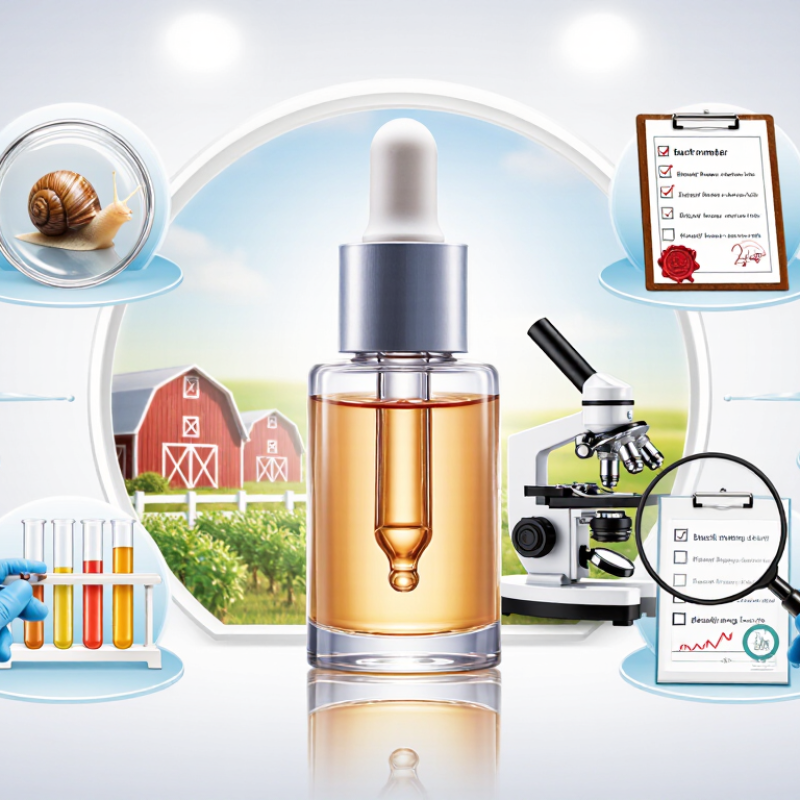
2026 How to Source Snail Mucin Repair Serum?

Define Snail Mucin Repair Serum Specifications and Quality Requirements

How to Source Snail Mucin Repair Serum?

A reliable formula begins with a precise specification, not a trend-based ingredient list. The 2024 Grand View Research skincare analysis valued the global market at about USD 155.7 billion in 2023. This scale increases pressure on suppliers and quality teams. Define the filtrate’s source, collection method, filtration process, and preservation system. Require full INCI documentation, batch records, allergen statements, and traceability to the production site.

Set measurable targets for appearance, odor, pH, viscosity, and microbial limits. A practical specification may set pH near 5.0–6.5, depending on the complete formula. Confirm these limits through stability trials, not assumptions. Test aerobic microorganisms, yeast, mold, and specified pathogens under recognized cosmetic methods. ISO 22716 provides a useful GMP framework for production and quality control. It does not replace independent verification.

Do not judge quality by a clear bottle or a silky first impression. Request identity testing, preservative efficacy testing, heavy-metal screening, and accelerated stability data. Verify the claimed mucin content with a validated method, because “snail filtrate” can vary widely between suppliers. The 2024 Mintel beauty research continues to show strong consumer interest in efficacy and ingredient transparency. That makes evidence essential. I would reject unsupported “repair” claims. Even experienced buyers can overlook seasonal variation, packaging interaction, or odor changes after heat exposure. That is where sourcing often fails.

Identify Reliable Manufacturers and Verify Their Production Capabilities

Sourcing a snail mucin repair serum starts with the manufacturer, not the packaging. Grand View Research valued the global skincare market at approximately US$155 billion in 2022, showing strong demand for specialized formulas. However, demand does not prove manufacturing quality. Request the factory’s ISO 22716 compliance records, production address, business license, and recent audit results. Reliable suppliers should explain their mucin collection, filtration, preservation, and filling processes clearly. Vague answers are a warning sign.

Verify production capability with evidence. Ask for monthly capacity, current utilization, minimum order quantity, lead time, and equipment photographs from the actual site. Review batch records, microbial limits, heavy-metal tests, allergen controls, stability data, and compatibility results for the final bottle.

A certificate helps, but it is not magic. The ISO Survey 2023 recorded more than 1.2 million ISO 9001 certificates worldwide, yet certification alone cannot confirm a serum’s performance or traceability.

I would request a pilot batch before signing a large order. This step may feel slow. It often prevents expensive reformulation.

Tips: Compare three manufacturers using the same checklist. Confirm whether “snail mucin” means filtrate, secretion extract, or a blended ingredient. Check the ingredient percentage and test method. Ask for samples from three separate batches, not one attractive sample. Keep independent laboratory testing in the budget. I once overlooked packaging compatibility; the serum later showed separation near the pump. That mistake was avoidable.

Evaluate Snail Mucin Sources, Extraction Methods, and Ingredient Purity

2026 How to Source Snail Mucin Repair Serum?

Evaluate Snail Mucin Sources, Extraction Methods, and Ingredient Purity

A reliable serum begins with traceable snail mucin. Ask suppliers for species identification, farm location, feeding records, and collection dates. Clear records matter. They help buyers connect each batch to its origin. Ethical collection should avoid unnecessary harm and stressful handling. However, supplier statements alone are not enough. Independent audits provide stronger evidence.

Extraction methods can change the final texture, odor, and active profile. Some producers use gentle stimulation, followed by filtration and controlled processing. Others may dilute the secretion before preservation. Request details about collection frequency, filtration stages, temperature control, and storage conditions. A low-temperature process may better protect sensitive compounds, but it does not guarantee superior performance. That assumption needs testing.

Purity requires more than a clean appearance. Review certificates for microbial limits, heavy metals, residual solvents, and preservative levels. Check the mucin percentage, not only the total serum volume. Compare the certificate with third-party laboratory results from recent batches. I would also examine odor, color, viscosity, and pH after transport. These small checks often reveal handling problems. Still, testing can miss issues when sampling is weak. This is an imperfect part of sourcing. Keep retained samples and record every change. A stable formula should feel consistent on skin, while supporting evidence remains more important than dramatic marketing claims.

2026 How to Source Snail Mucin Repair Serum?

Evaluation of snail mucin sources, extraction routes, and ingredient-purity documentation.

The chart applies a transparent 0–5 procurement rubric to common sourcing routes. Higher scores indicate stronger practical control over traceability, microbial safety, batch consistency, and purity documentation. Snail secretion filtrate should be supported by species identification, collection records, filtration details, preservative information, microbiological testing, heavy-metal screening, and a batch-specific certificate of analysis.

Compare Samples, Formulations, Packaging, Pricing, and Minimum Order Quantities

2026 How to Source Snail Mucin Repair Serum?

Sourcing starts with comparable samples, not attractive claims. Request three batches from each supplier, using identical specifications. Check mucin percentage, extraction method, odor, color, pH, viscosity, and absorption. A practical facial-serum target is usually pH 5.0–6.0, but stability testing must confirm suitability. Ask for certificates of analysis, microbial results, allergen statements, and preservative-challenge data. I would also verify whether “mucin content” means pure filtrate or a diluted solution. Suppliers do not always define it consistently.

Formulation trials should compare water-based, gel-serum, and barrier-support versions. Record tackiness after five minutes. It matters during real customer use. The global skincare products market reached about USD 155.7 billion in 2023, according to Grand View Research’s 2024 estimate. That scale increases competition, but it does not prove every repair claim. Use controlled stability tests instead. Claims should match available evidence and local cosmetic requirements.

Packaging affects both protection and cost. Airless pumps may reduce contamination risk, while glass droppers can create oxygen exposure and dosing variation. Compare 30 ml and 50 ml formats, closure compatibility, leakage, decoration, and carton materials. Smithers’ sustainable packaging research highlights continuing pressure to reduce material use and improve recyclability. Pricing should separate formula, filling, packaging, testing, freight, and artwork. As a working benchmark, request quotations at 1,000, 3,000, and 10,000 units. Initial MOQs can look manageable, yet custom pumps or printed components may create hidden minimums. My own sourcing mistake would be trusting the lowest quote too early. A cheaper serum is not cheaper after failed stability testing.

Confirm Compliance, Testing Documents, Shipping Terms, and Supplier Agreements

Sourcing a snail mucin repair serum requires more than comparing prices. The supplier should provide a complete ingredient specification, allergen statement, microbiological results, stability data, and a current Certificate of Analysis for every batch. ISO 22716:2007 remains a practical benchmark for cosmetic Good Manufacturing Practices. Ask for production records, cleaning controls, and traceability from snail secretion collection to finished filling. The documentation must match the actual factory, not a trading company’s template.

Regulatory checks should reflect the destination market. In the United States, the FDA’s MoCRA framework requires facility registration and cosmetic product listing, while safety substantiation must remain available. For Europe, assess the Product Information File, Cosmetic Product Safety Report, responsible-person details, and CPNP notification requirements. Testing should include microbial limits, heavy metals, preservative effectiveness, compatibility with packaging, and accelerated stability. Some suppliers provide only a passing preservative test. That is not enough.

Shipping terms can quietly create losses. Confirm Incoterms, temperature limits, customs responsibility, insurance, lead time, and procedures for leakage or delayed clearance. A supplier agreement should define batch rejection, change notification, audit rights, confidentiality, intellectual property, and recall costs. UN Comtrade trade data shows HS 3304 cosmetics move through complex international supply chains, so product classification should be checked before booking freight. GlobalData’s beauty industry forecasts indicate continued premium skincare growth, but forecasts are not proof of supplier quality. I would request a retained sample and inspect it after transport. One weakness remains: no document replaces an independent audit.

2026 How to Source Snail Mucin Repair Serum? - Confirm Compliance, Testing Documents, Shipping Terms, and Supplier Agreements

Practical sourcing control matrix for private-label and contract-manufactured cosmetic serum procurement

Workstream Requirement / Data Field Verification and Acceptance Criteria Evidence to Collect Timing
A. Product Identity and Formula Definition
Product specification Snail-derived ingredient identity and concentration Confirm the INCI name, commonly listed as Snail Secretion Filtrate, the percentage used, solvent system, and whether the percentage refers to raw material or finished serum. Full INCI list, formula specification, raw-material specification, batch manufacturing record template Before quotation
Claims control Repair, soothing, moisturizing, and barrier-support claims Use cosmetic claims supported by appropriate evidence. Avoid medical, wound-healing, therapeutic, or disease-treatment claims unless separately authorized under the destination market’s rules. Claims substantiation file, instrumental hydration data, consumer-use study, approved marketing copy Before artwork approval
Formula consistency Appearance, odor, color, pH, viscosity, density, and fill volume Set numerical internal specifications using approved pilot samples. pH must be suitable for the formula, packaging, preservative system, and intended skin application. Finished-product specification, approved reference sample, certificate of analysis Each batch
B. Compliance and Traceability
Destination-market compliance Regulatory status for each sales market Review the applicable cosmetic requirements for the European Union, United States, United Kingdom, or other destination. Confirm responsible-person, product-registration, facility-registration, labeling, and safety-file duties where applicable. Regulatory assessment, product information file index, safety assessment, facility-registration records where applicable Before purchase order
Manufacturing practices Cosmetic GMP system Prefer manufacturing controls aligned with ISO 22716 or an equivalent documented cosmetic GMP system, including hygiene, batch records, deviation handling, change control, and complaint management. GMP certificate or audit report, SOP index, recent corrective-action report Before qualification
Snail-source traceability Species, collection or farming method, geographic origin, and welfare controls Trace every production lot to the approved source. Confirm that the process does not use prohibited or unapproved animal-derived inputs and that local animal-welfare and environmental requirements are addressed. Origin declaration, supplier map, lot-traceability record, ethical sourcing statement Before approval and annually
Ingredient restrictions Restricted substances, allergens, nanomaterials, and animal-testing status Screen the formula and raw materials against the destination market’s prohibited and restricted substance lists. Obtain a documented animal-testing and nanomaterial declaration where relevant. Regulatory declaration, allergen statement, nanomaterial statement, animal-testing statement Before label approval
C. Testing and Technical Documents
Microbiological quality Total microbial count and specified microorganisms Test finished product using validated methods. ISO 17516 provides a recognized framework; acceptance limits must reflect product type, intended use, and the destination market. Batch microbiology report, method reference, laboratory accreditation details Each production batch or risk-based schedule
Preservative efficacy Challenge test for the complete formula Conduct a preservative efficacy test such as ISO 11930, especially for water-based serum formulas. Test the final formula in the final packaging configuration where practical. Challenge-test protocol and report, preservative-system specification Before commercial launch
Stability and compatibility Accelerated, real-time, freeze-thaw, light, and packaging compatibility Define storage conditions, test duration, sampling intervals, and pass/fail criteria. Monitor odor, color, phase separation, pH, viscosity, microbiology, and container integrity. Stability protocol, interim report, final report, packaging compatibility report Pilot and ongoing review
Contaminant screening Heavy metals, residual solvents, pesticides, and other risk-based contaminants Use a documented risk assessment based on raw materials, water source, processing aids, and destination-market requirements. Results must comply with applicable legal and internal limits. Third-party laboratory report, contaminant risk assessment, raw-material COA Pre-launch and periodic review
Safety documentation Safety Data Sheet and ingredient safety information SDS must reflect the supplied material and current hazard-classification rules. Obtain toxicological information needed by the cosmetic safety assessor. Current SDS, toxicology summary, allergen declaration, raw-material safety assessment Before shipment
D. Packaging, Shipping, and Import Controls
Primary packaging Bottle, pump, dropper, closure, seal, and material compatibility Verify leakage resistance, dosage accuracy, product-contact material suitability, light protection, recyclability claims, and compatibility with the serum over the intended shelf life. Packaging specification, material declaration, compatibility report, approved packaging sample Before mass production
Shipping terms Incoterms® 2020, transport mode, lead time, and insurance State the named place, applicable Incoterms® 2020 rule, transfer-of-risk point, export/import responsibilities, insurance allocation, and estimated production plus transit time. Commercial invoice template, packing list, shipping instruction, freight quotation, insurance confirmation Before purchase order
Export and import documents HS classification, country of origin, customs, and transport documents Confirm the proposed HS code with the customs broker, verify origin information, and ensure invoice, packing list, transport document, and any required declarations are consistent. Draft commercial invoice, packing list, certificate of origin where required, transport document checklist Before dispatch
Storage and transport conditions Temperature, humidity, light, and handling controls Define the approved storage range and transport precautions from stability data. Record temperature excursions and establish a disposition procedure. Storage statement, transport specification, data logger requirement, excursion form Every shipment
E. Supplier Agreement and Commercial Controls
Quality agreement Responsibilities, specifications, release, deviations, and change control Define who approves raw materials, testing, batch release, deviations, complaints, recalls, audits, record retention, and formula or process changes. Signed quality agreement, specification annex, change-notification procedure Before first commercial batch
Batch release Release documents and acceptance process No shipment before review of the batch number, manufacturing date, expiry or best-before date, COA, microbiology report, packaging inspection, and quantity reconciliation. Batch release checklist, COA, inspection report, retained-sample record Each batch
Nonconformance and recall Complaint, investigation, corrective action, and recall response Set notification deadlines, investigation responsibilities, root-cause analysis, corrective-action expectations, product-traceability requirements, and recall cost allocation. Complaint SOP, recall procedure, CAPA template, contact escalation list Contract term
Commercial terms MOQ, price basis, payment milestones, lead time, and tooling ownership Record currency, tax treatment, validity period, minimum order quantity, sample charges, payment schedule, production lead time, and ownership of formula, artwork, molds, and unused packaging. Signed quotation, purchase order, sales contract, tooling and intellectual-property schedule Before order confirmation
Audit and renewal Supplier performance review and approval renewal Review delivery performance, defect rate, documentation accuracy, complaint history, audit findings, regulatory changes, and continuity risk at least annually or after a major quality event. Supplier scorecard, audit report, annual review record, risk reassessment Annually
Sourcing decision rule: Approve a supplier only after the product specification, compliance review, risk-based testing package, shipping responsibilities, and signed quality/commercial agreements are complete. Regulatory limits and labeling duties must be confirmed for the specific destination market before sale.

FAQS

What should a buyer define before sourcing a snail mucin serum?

Define the filtrate source, collection method, filtration process, preservative system, and complete ingredient list. Set targets for color, odor, pH, viscosity, and microbial limits. Do not rely on trends alone. A clear formula matters.

Which documents should suppliers provide?

Request certificates of analysis, batch records, allergen statements, traceability records, and production-site details. Also request preservative-challenge results and accelerated stability data. Independent verification remains valuable. Paperwork can still be incomplete.

What pH range is suitable for this type of serum?

A practical facial-serum target often falls between pH 5.0 and 6.0. Some formulas may require a range near 5.0–6.5. Confirm suitability through stability trials. Do not assume.

How can buyers compare supplier samples fairly?

Request three batches from each supplier using identical specifications. Compare odor, color, pH, viscosity, absorption, and mucin concentration. Test the samples under controlled conditions. First impressions can mislead.

How should mucin content be verified?

Ask whether the stated percentage means pure filtrate or a diluted solution. Require a validated identity or content-testing method. Supplier definitions may differ widely. That creates confusion.

Which formulation details deserve practical testing?

Compare water-based, gel-serum, and barrier-support versions. Record tackiness after five minutes, absorption speed, odor, and skin feel. Use real application conditions. Five minutes reveals a lot.

How does packaging affect quality and cost?

Compare airless pumps and glass droppers for contamination risk, oxygen exposure, and dosing consistency. Check 30 ml and 50 ml formats, leakage, closure compatibility, and decoration. Review material use and recyclability. Packaging is not decoration only.

What should pricing and minimum order quantities include?

Separate formula, filling, packaging, testing, freight, artwork, and component costs. Request quotations at 1,000, 3,000, and 10,000 units. Check hidden minimums for pumps and printed parts. The lowest quote may fail later.

How should cosmetic claims be controlled?

Match claims with stability evidence, testing results, and applicable cosmetic requirements. Avoid unsupported promises about skin repair or dramatic effects. Describe measurable cosmetic benefits instead. I would question every strong claim.

Conclusion

Sourcing a high-quality Snail Mucin Repair Serum in 2026 requires a clear purchasing strategy and well-defined product specifications. Buyers should first establish requirements for snail mucin concentration, texture, skin feel, appearance, stability, preservative system, packaging format, and target market. Reliable manufacturers should then be assessed through production capacity, quality-control procedures, facility standards, previous export experience, and their ability to support customization and consistent batch production.

A thorough evaluation should cover the origin of the snail mucin, ethical collection practices, extraction technology, filtration, processing conditions, and ingredient purity. Comparing samples is essential for reviewing performance, formulation compatibility, packaging protection, pricing, and minimum order quantities. Before placing an order, buyers should request relevant testing records, safety and quality documents, product specifications, certificates, shipping terms, lead times, payment conditions, and a clear supplier agreement. Careful verification at every stage can reduce sourcing risks and support a stable, compliant, and commercially competitive product launch.

Amelia

Amelia

Amelia is a dedicated marketing professional with extensive knowledge of the company’s products, services, and customer-focused solutions. Through her work, she transforms complex product information into clear, practical, and engaging content that helps readers make informed business decisions.......